1. Confirm what you are actually going to see
Ask for the project, tower, unit number or unit type, and the purpose of the appointment. A showroom visit, an actual-unit viewing and a turnover inspection answer different questions. If the offered unit cannot be visited, identify the substitute and write down what cannot be verified from it.
PrimaryHomes provides a tour-selection channel and describes viewing within its discovery stage, separately from booking and move-in. Use that distinction when arranging your appointment: access to a display space does not mean the unit is ready for handover. Confirm meeting point, access arrangements and permission to take photos before travelling.
- Bring the current floor plan and a list of furniture or activities the unit must accommodate.
- Choose three non-negotiables, such as a separate sleeping space, a workable desk or convenient access for an occupant.
- Ask which parts of the building and offered unit will be accessible.
Source context: PrimaryHomes: schedule a tour · PrimaryHomes: Easy Homebuying
2. Keep three kinds of evidence separate
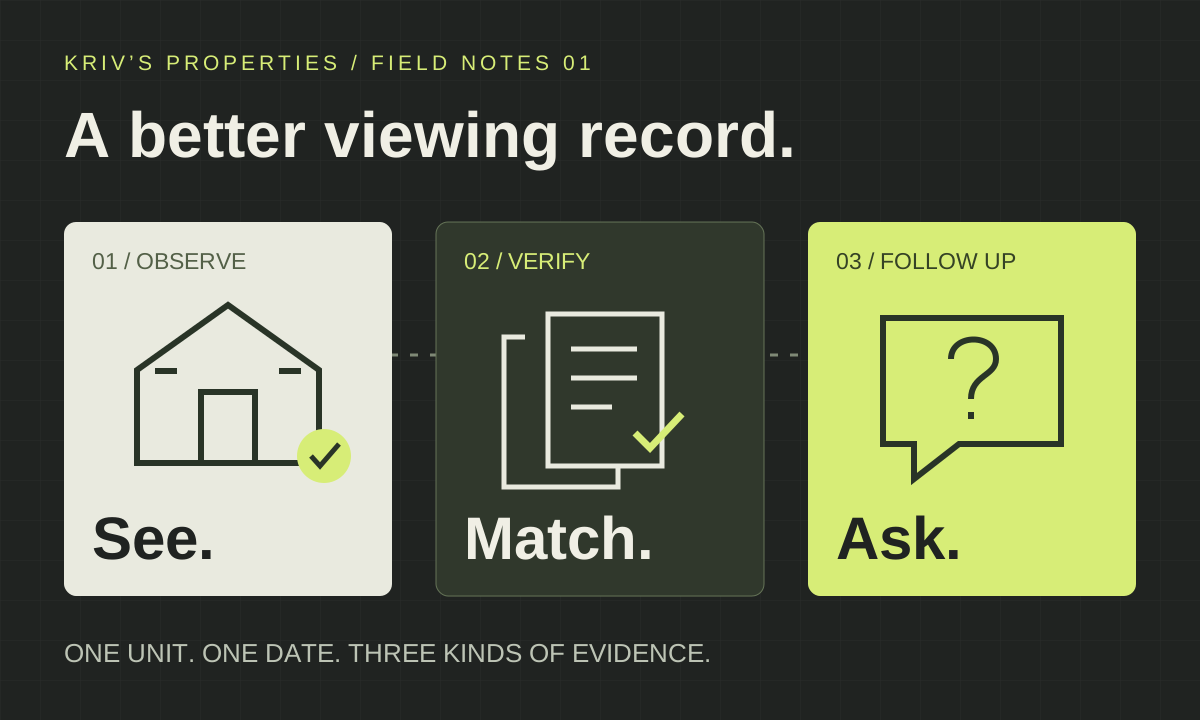
Use one note for each candidate. For every important point, mark Observed, Documented or Unresolved. Add the unit identity, date, source and next question. A confident verbal answer belongs in the follow-up list until you have the written information needed for your decision.
For example, you might observe a dining table in the showroom, receive a written standard-inclusions list without that table, and still have no dimensions for the offered unit’s dining area. This is a hypothetical example: the photo helps you imagine the space, while the documents and measurements determine what you can compare.
- Observed: what you saw or tested, and whether it was in the actual unit or a substitute.
- Documented: the exact plan, specification or written answer, including its date or revision.
- Unresolved: the question, who will answer it and whether it could change your shortlist.
3. Walk through an ordinary day
Start at the entrance. Imagine arriving with groceries, putting belongings away, preparing food, working, resting and doing laundry. Check whether furniture and door movements compete for the same space. Ask permission before measuring or operating fixtures; record inaccessible areas rather than guessing.
Notice light, sound, outlook and mobile reception at the time of your visit. A quiet afternoon or a clear video call is one observation, not evidence of all-day conditions. For a serious candidate, consider a follow-up at the time you would normally be home. Use the existing layout guide for a more detailed plan comparison.
4. Follow the route outside the front door
Where access is permitted, walk from the arrival point to the lift, corridor and unit. Then locate the areas relevant to your routine: deliveries, refuse handling, parking and shared facilities. Ask which routes and facilities belong to the residential building and which serve another part of the development.
IPI Center illustrates why that question matters: Rockwell’s overview identifies Lincoln residences alongside offices and retail. A feature elsewhere in a mixed-use estate does not, by itself, establish a resident’s access, opening hours or booking rights. Ask for the applicable residential information rather than treating all facilities as interchangeable.
Source context: Rockwell at IPI Center: official project overview
5. For an online viewing, ask for one continuous walkthrough
Agree on the route before the call: identify the building and unit, enter through the door, show each room, then show the outlook and accessible common areas. Ask the presenter to distinguish the actual offered unit from any showroom or reference footage. Request permission before recording the call.
A live video helps answer visual questions, but camera framing, audio processing and lighting can conceal important details. Ask for still photos and a dimensioned plan to support the call. Mark noise, odours, material condition and anything off-camera as unresolved where the video cannot establish them. A sales viewing is not a substitute for a qualified condition inspection when one is needed.
6. Send a focused follow-up before comparing offers
After each visit, write a short verdict: what fits your routine, what would require compromise and which unanswered question could change your decision. Compare candidates using the same headings. Avoid adding a numerical score that makes an unresolved essential requirement look less important than several attractive extras.
Request the exact unit plan, written inclusions, relevant building-use information and a dated computation referring to the same unit. The payment guide explains how to compare those documents. If the visit changes your location, timeline or must-haves, update your shortlist brief before arranging more viewings.
Buyer questions
Can I use the showroom to confirm my unit’s finishes?
Only where the written unit-specific inclusions establish the match. Ask which items are display upgrades, movable furniture or excluded from the offer.
What if the actual condo is not accessible yet?
Record the limitation. Use the identified plan and specifications for comparison, and keep views, condition and other unobservable features unresolved. Do not describe a substitute viewing as an inspection of your unit.
Should I reserve immediately after a viewing?
A viewing alone does not settle the decision. First resolve the questions that matter to you and review the applicable documents and terms. This checklist does not assess the legal or financial suitability of a reservation.
Keep these three things
- Identify the offered unit and any substitute viewing space.
- Separate what you observed from written evidence and unresolved questions.
- Use the same viewing record for every candidate.